
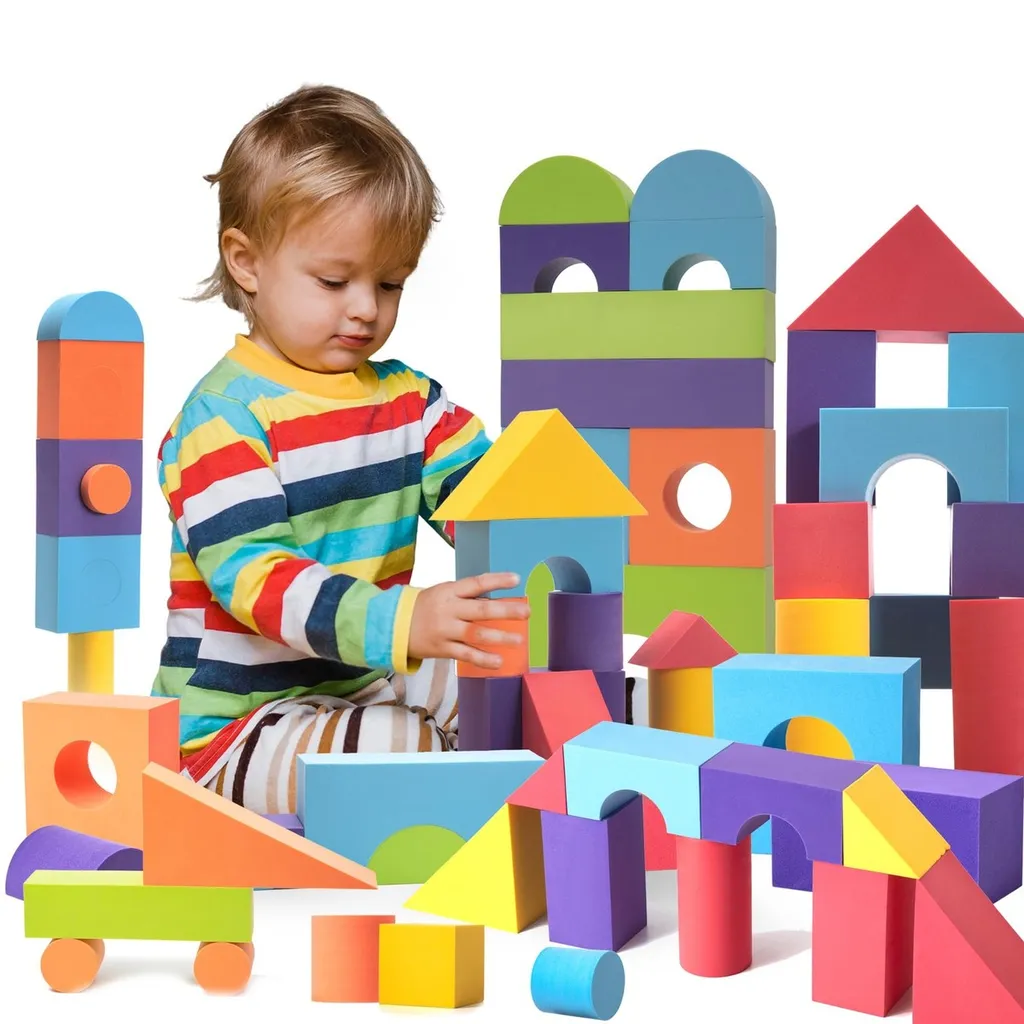
Giant Building Blocks are an exciting solution for children who enjoy creating large structures, imaginative spaces, and hands-on indoor adventures. Giant Building Blocks allow children to transform an ordinary play area into a castle, city, fort, tower, bridge, or creative construction zone. With Giant Building Blocks, children can experiment with size, balance, shapes, and layouts while developing practical skills through play. Whether used at home, in classrooms, childcare centers, or indoor activity spaces, Giant Building Blocks offer an adaptable way to make big indoor builds both entertaining and educational.
Why Big Indoor Builds Are So Engaging
Large-scale construction gives children a chance to think beyond small tabletop projects. When children have enough space and appropriately sized building pieces, they can create structures that they can physically walk around or interact with.
This type of open-ended play encourages children to make their own decisions. Instead of following one fixed design, they can determine what to build, which pieces to use, and how to modify their project when something does not work.
Encouraging Imagination
A large construction project can quickly become the setting for imaginative storytelling. A collection of blocks might become a medieval castle, a futuristic space station, a fire station, or an animal shelter.
Giant Building Blocks are especially useful for this type of play because their larger size makes creations more visible and interactive. Children can build environments that support role-play and create stories around the structures they design.
Making Indoor Play More Active
Indoor play does not have to mean sitting at a table. Large construction pieces encourage children to stand, walk, bend, reach, carry, stack, and rearrange materials.
This combination of physical movement and creative thinking can make indoor play more dynamic. Children stay involved because they are physically contributing to something they want to create. For more information about large building blocks for kids, explore their features, benefits, age suitability, and role in encouraging imaginative and educational play.
Benefits of Giant Building Blocks
Construction activities can support a wide range of developmental skills. Children learn naturally as they handle materials, make decisions, encounter challenges, and interact with others.
Developing Motor Skills
Large blocks require physical coordination. Children may need to carry pieces across a room, position them carefully, stack them, or connect multiple components.
These movements can support gross motor skills, balance, coordination, and body awareness. Smaller construction actions can also encourage hand-eye coordination when children align or connect individual pieces.
Improving Problem-Solving
Big structures require planning. Children quickly discover that placing too much weight on an unstable foundation can cause a tower to fall.
Giant Building Blocks allow children to learn these principles through experimentation. If a design fails, they can rebuild it using a different arrangement. This process encourages flexible thinking and persistence.
Supporting Spatial Awareness
Construction play introduces children to spatial concepts in a hands-on way. They can compare height and width, recognize different shapes, estimate distances, and understand how pieces fit together.
These experiences can complement early learning activities involving geometry, measurement, patterns, and position.
Creative Ideas for Big Indoor Builds
Large construction toys can support many different projects. Adults can offer a theme while allowing children to decide how their creations should look.
Build a Giant Indoor Fort
An indoor fort can become a cozy imaginary space for storytelling and pretend play. Children can create walls, entrances, rooms, and decorative features.
Once the fort is finished, it can become a reading corner, explorer headquarters, campsite, or secret headquarters. This project combines construction with imaginative role-play.
Create a Pretend City
A city-building project can involve multiple structures. Children can create houses, stores, hospitals, schools, roads, bridges, parks, and transportation stations.
Giant Building Blocks allow several children to work on different parts of the city at the same time. The finished environment can then become the setting for collaborative storytelling.
Design a Tall Tower
A tower challenge is a simple way to introduce engineering concepts. Children can experiment with different foundations and determine how to make a structure taller without making it unstable.
Encourage children to predict which design will work best before testing it. This turns construction into an engaging experiment.
Giant Building Blocks for Group Construction
Big indoor builds are particularly useful for group activities. When several children work on one project, they learn to communicate, share materials, and coordinate their ideas.
Team-Based Projects
Divide a large construction project into sections. One group can create a foundation, another can construct walls, and another can work on decorative details.
This approach gives every child an opportunity to contribute. The final structure represents a shared accomplishment rather than the work of one person.
Communication and Cooperation
Children naturally need to communicate during collaborative construction. They may ask for specific pieces, explain where something should go, or negotiate different design ideas.
Giant Building Blocks can make these interactions more meaningful because large structures often require multiple children to participate.
Choosing Blocks for Large Indoor Projects
The right construction set depends on the intended age group, available space, and type of play. Parents and educators should consider several factors before selecting large building pieces.
Material and Durability
Oversized blocks may be made from foam, plastic, wood, or other materials. Lightweight foam pieces can be useful in many indoor environments because they are easier for children to move.
Durability is also important. Construction materials should be able to withstand repeated stacking, moving, and rebuilding. Smooth surfaces and sturdy designs can make everyday play more convenient.
Size and Quantity
Large indoor builds require enough pieces to create substantial structures. A small set may be suitable for simple towers, while larger collections can support forts, cities, and collaborative projects.
Consider the available floor area before purchasing. Children need sufficient space to build and move safely around their creations.
Using Giant Building Blocks for Learning
Construction activities can easily become educational without losing their playful character. Teachers and parents can incorporate simple learning challenges into building sessions.
Children can count blocks, identify shapes, compare heights, create patterns, or estimate how many pieces are required for a structure.
Giant Building Blocks can also support language development. Ask children to describe their creations, explain how they built them, or invent stories about the structures.
Simple STEM Connections
Building provides an introduction to basic science, technology, engineering, and mathematics concepts. Children can explore stability, gravity, balance, weight distribution, measurement, and geometry through direct experimentation.
Adults do not need to provide complicated explanations. Simple questions can encourage children to discover principles themselves.
Making Big Builds More Creative
To keep construction play interesting, introduce new challenges regularly. Children might be asked to build a bridge strong enough to support a toy vehicle or create a tower using only certain shapes.
Another idea is to introduce storytelling themes. A “space mission” could involve building a launch station, while an “underwater adventure” could inspire children to create an ocean research base.
Giant Building Blocks are flexible enough to support these changing themes without requiring a completely new toy collection.
Safety Tips for Big Indoor Construction
Safety should always be considered when children build large structures. Choose products appropriate for the child's age and follow the manufacturer's recommendations.
The construction area should have enough open space for movement. Keep projects away from stairs, sharp furniture edges, fragile objects, and other hazards.
Children should understand that blocks are intended for building and should not be thrown. Tall structures should be built where falling pieces are unlikely to cause injury.
Inspect blocks regularly for cracks, sharp edges, loose components, or other damage. Remove damaged pieces from play.
Frequently Asked Questions
1. What are Giant Building Blocks?
Giant Building Blocks are oversized construction pieces designed for large-scale building, imaginative play, collaborative projects, and hands-on learning. They can be used to create structures such as forts, towers, bridges, houses, and pretend cities.
2. Are Giant Building Blocks good for indoor play?
Yes. Many large construction sets are designed for indoor environments. Lightweight and appropriately sized options can be used in playrooms, classrooms, childcare centers, and other suitable spaces.
3. What can children build with large blocks?
Children can build towers, forts, castles, houses, cities, bridges, vehicles, animal homes, space stations, and many other imaginative structures. The possibilities depend largely on the number and design of available pieces.
4. Do Giant Building Blocks help children learn?
Yes. Construction play can support spatial awareness, motor coordination, problem-solving, creativity, communication, counting, pattern recognition, and basic STEM concepts.
5. How much space is needed for big indoor builds?
The amount of space depends on the size of the blocks and the intended project. Children should have enough room to construct comfortably and move safely around their structures without obstacles.
Conclusion
Giant Building Blocks can transform indoor play into a large-scale creative experience where children are free to imagine, construct, test, and rebuild. From giant forts and towers to pretend cities and collaborative environments, these versatile construction pieces encourage children to turn ideas into physical creations. Giant Building Blocks also provide opportunities to develop motor skills, spatial awareness, problem-solving abilities, communication, and teamwork. With suitable materials, adequate space, and age-appropriate supervision, large building activities can become a valuable part of both home and educational play. Most importantly, Giant Building Blocks give children the freedom to make indoor play bigger, more active, and more imaginative while discovering new possibilities with every structure they create.